
Ovations
Ovations
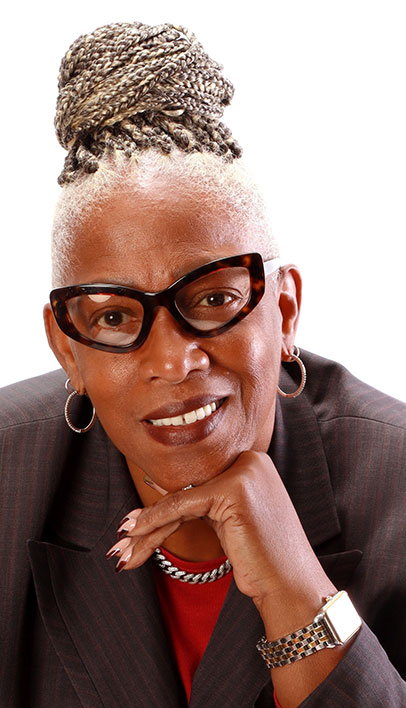
Dr. Vanda Seward has spent decades working inside the criminal legal system — as a criminologist, journalist, and advocate. Now, she has put those experiences into a book.
Seward, a tenured assistant professor of criminal justice at Kingsborough Community College and director of its criminal justice program, published her debut memoir titled “This Wasn't Supposed to Be My Story — Defying Expectations, Living My Truth: A Memoir of Resilience & Courage.”
The memoir, published in February by NY Publishers, traces Seward's path from teenage motherhood in the Bronx to her career as a professor, where she teaches courses on crime and punishment, corrections and sentencing, and minorities in criminal justice. "It explores resilience, identity, justice, and the transformative power of education,” she said. “The narrative is both personal and political, not in a partisan sense, but in its examination of systems, structures, policy, and power."
The idea for the book came from a graduate school assignment. While studying at CUNY’s Craig Newmark Graduate School of Journalism, Seward enrolled in a features writing class taught by Pulitzer Prize-winning journalist and former Essence magazine executive editor Linda Villarosa.
Hearing Villarosa tell her, “You need to write a book,” after reading a personal essay Seward had written for class was the encouragement she needed to return to a manuscript she had set aside a few years before about her personal and professional experiences. "Her presence alone was inspiring, but it was her feedback on my personal essay that truly changed everything," Seward said.
The writing process, from that original draft to the finished book, took about three years in total. “The real work was trying to remember more than 40 years of events that I believed were important to include,” she shared. "When I got stuck, whether thinking about myself as a child, a wife, or a supervisor, I reached out to people who shared those experiences with me and asked them to help recall different periods of our lives."
One of the most unexpected parts of the process, Seward said, was learning how much her presence had meant to others.
"What surprised me most was learning, through conversations with friends, family, and colleagues, how deeply I had impacted their lives," she said. "Many people recalled moments that were transformative for them — moments I had long forgotten. I realized it is because I have always simply shown up as myself, authentic, focused on the work, and not seeking recognition or keeping score. The process revealed that impact is often quiet. I never knew me showing up was making a difference."
The book is closely tied to the work Seward does in the classroom. “My teaching emphasizes lived experience, structural analysis, and reform. The memoir brings those lessons to life,” she said. “It helps students see that criminal justice is not abstract; it affects real people and real families.”
For example, she wrote about having KCC students take part in “The Drive,” a program that brings participants into a prison to speak one-on-one with someone who has been incarcerated for decades, many with few or no visits. “The students and I visited for about 2 hours. The conversations included asking about their carceral experiences and discussing the students' career goals with hopes of getting some insight into what makes a good criminal justice professional,” she shared. “This was an experience that they will never forget. After the visiting experience, they were enlightened and were amazed that the person they were sitting across from was nothing like the textbook or movies describe.” She hopes to repeat the prison outing twice a year.
For Seward, publishing the memoir carries both personal and professional meaning. "Personally, it is a declaration of ownership over my narrative," she said. "Professionally, it reinforces my commitment to scholarship, advocacy, and mentoring the next generation of justice professionals."
She plans to continue writing op-eds and articles about the criminal legal system. "There is still much work to be done,” Seward said. “There is no true justice in our system as it stands, and I will continue using my voice to challenge that reality.”
She said she wrote the book to help readers understand that circumstances do not define destiny. "I write for every person who has been counted out. For anyone who was told they would never make it. For parents doing their best. For people impacted by the criminal legal system, whether inside it or working to change it. And for every person and community determined to be more than its trauma.”
"This book is not just my story," she added. "It is a reminder that none of us is limited to the scripts society hands us. We can revise, reclaim, and rewrite our lives."